
When you visit your financial advisor, she will often ask what your risk tolerance is. If you say that you are risk tolerant but are in your 50s, she will politely try to convince you that you are actually not as risk tolerant as you might think you are. So, the financial advisor is actually trying to get you to choose a financial vehicle that is likely to yield a lower rate of return.
Why? Do you need a new financial advisor?
No! You have landed yourself an excellent advisor! For someone who has 30 years to go before retirement, the risky investment may very well be worth it. But someone with a shorter time horizon may see their savings dip below the threshold needed for retirement.
By choosing more conservative investment vehicles, you ensure that you can retire at 65. You are resilient in the face of uncertain market conditions.
This idea of risk aversion has something to tell us about how we should be running our economy. Growth is not the only thing that matters. We should not be hamstrung if a foreign power decides to play hardball with our economy. Over the last number of decades, Canada was so focused on GDP growth that it forgot about economic resiliency.
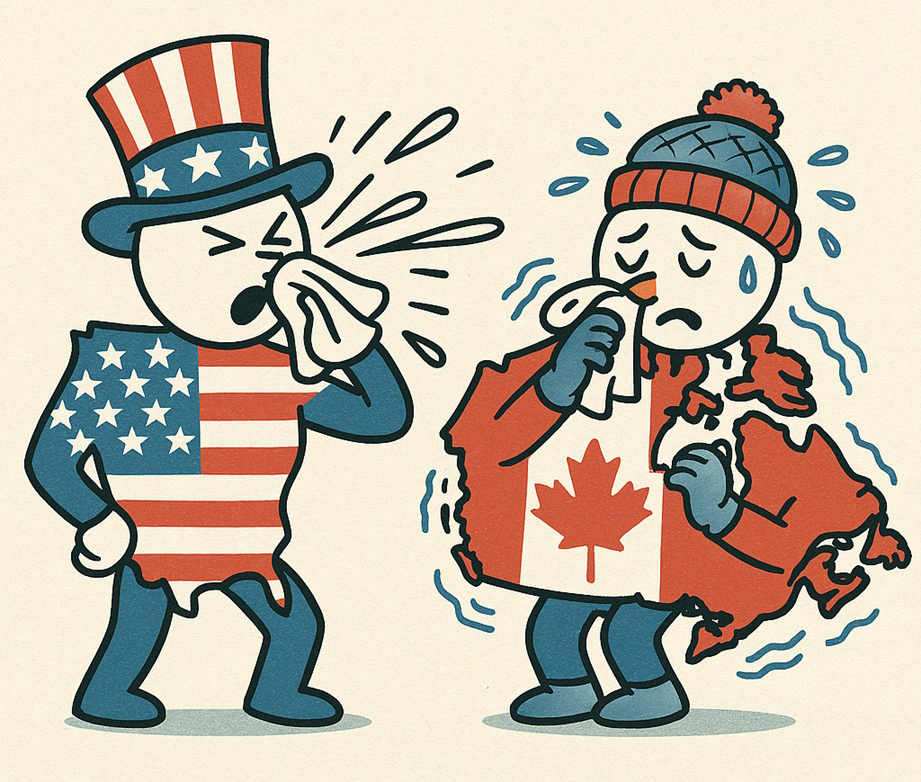
Let’s build a Canada that doesn’t catch a flu when the US sneezes! That means:
- we make it easy for goods to flow between the provinces,
- we diversify away from a single trading partner,
- we are self-sufficient and have our own supply chains in key areas like food, energy and basic medicine,
- we are able to take countermeasures when others decide to play hardball.